Cultivate your scientific curiosity
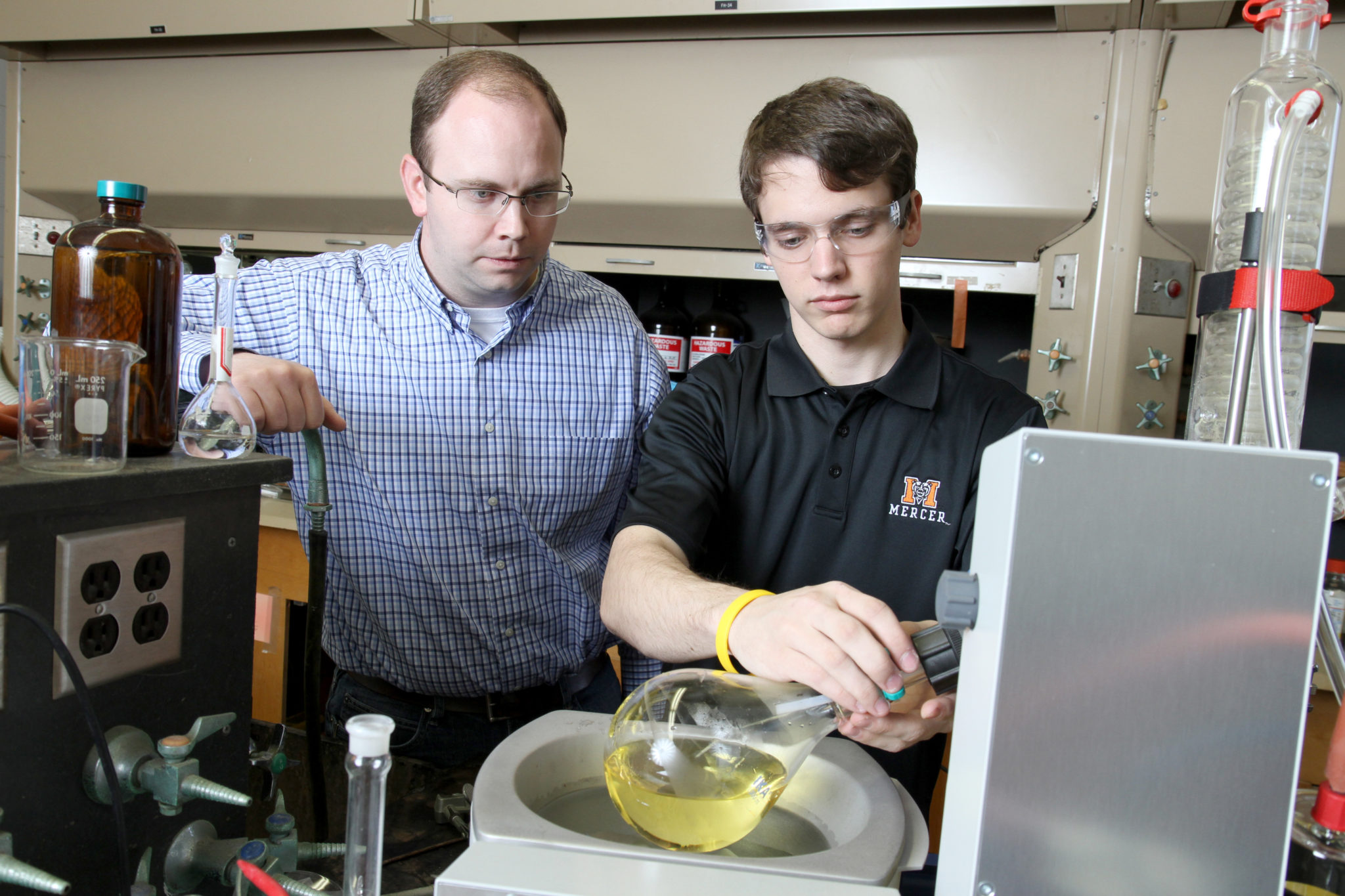
Mercer University’s Chemistry major promotes your scientific curiosity by preparing you to solve complex, real-world problems through chemistry research and development. You will learn the fundamental principles of chemistry that lay the groundwork for hands-on laboratory experiences and discoveries. Our Chemistry major is designed for motivated, science-inclined students hungry for a challenge. The rigorous coursework is certified through the American Chemical Society and provides opportunities to work with our experienced faculty conducting undergraduate research.
Our dedicated faculty encourage you to make your own discoveries and deepen your expertise with research in a variety of fields of chemistry, including:
- Analytical
- Bioorganic
- Environmental
- Inorganic
- Organic
- Physical
- Biochemistry
Learn more about our Chemistry major
Outside the Classroom
At Mercer University, we challenge you to take ownership of your education and improve your community outside the classroom.
Meet Our Professors
Faculty and Staff


















You can use the skills you’re learning in the classroom to better someone’s life.